
Two trips in September. Three days for Childhood Cancer Awareness Month with Penn State Health Children's Hospital — an event, a day at the hospital, and a block of interviews. Then two days in Washington for Climb the Hill, with Kids v Cancer and CureFest: the advocacy sessions, the march itself, and interviews at the hotel in between.
Five shooting days. Out of them: two documentaries, eight patient stories, social cuts off every piece, a newsletter for each as it publishes, and the whole lot released as a podcast as well.
That ratio is not a function of working fast in the edit. It was decided weeks earlier, and almost none of it is about cameras.
Most shoots are planned backwards
The normal sequence is: book the day, cover the thing, then sit down afterwards and ask what you can make from it. That is how you end up with one video and a folder of footage nobody opens again.
We plan the other direction. Before anything is booked, the question is what every piece has to become — not roughly, specifically. Eight patient stories means eight separate edits, which means eight interviews framed and lit to stand alone rather than as cutaways in a longer film. The documentaries need their own coverage. The social cuts need vertical-safe framing at the moment of capture, because you cannot invent headroom later. The podcast version needs audio that holds up with no picture at all, which changes microphone decisions on a windy street.
Each of those is a different requirement. If you learn them in the edit, you have missed them.
The plan is a document, not an intention
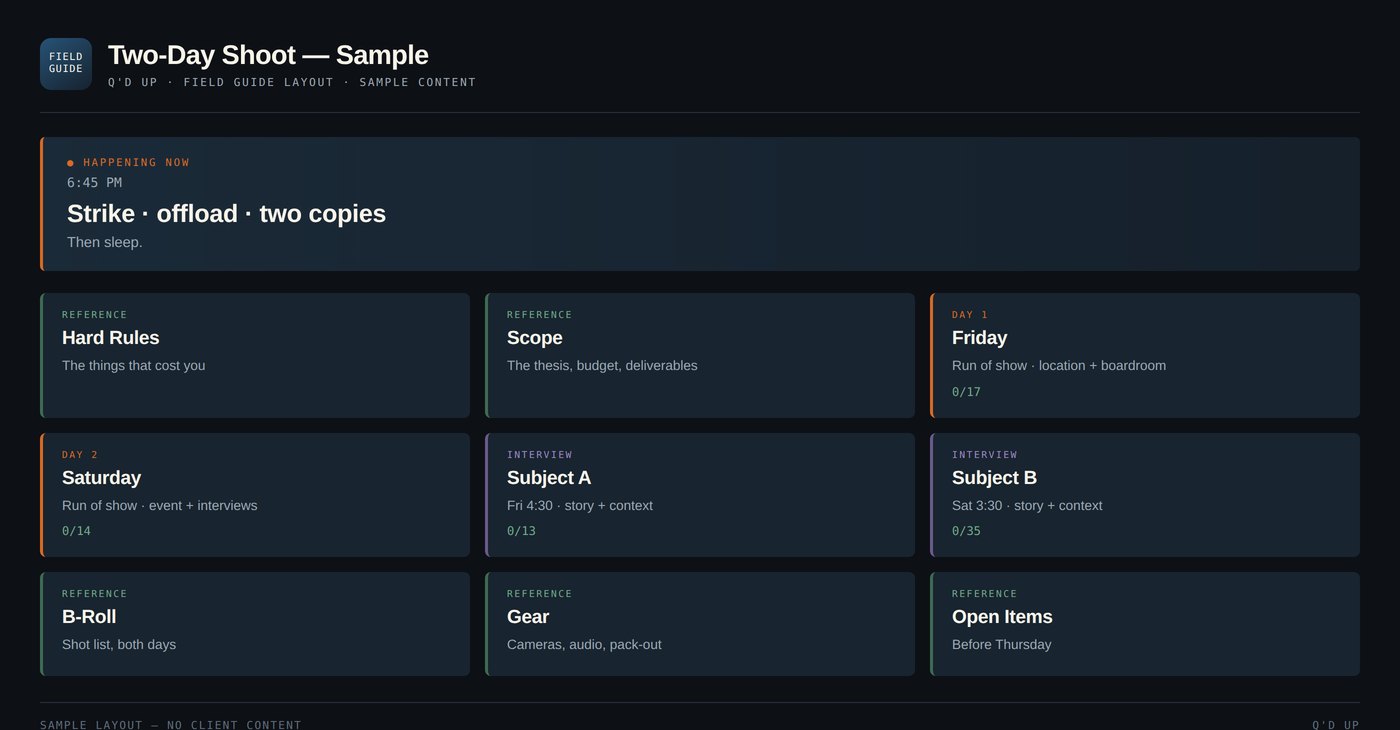
Before each trip we build a field guide. Not a call sheet — a working document that holds everything the days have to produce.
Shot lists per piece, so the crew knows which coverage belongs to the documentary, which to a standalone story, and which exists only to make a vertical cut work later. Interview questions researched per participant and written in advance, because a young person who has been asked the same four questions by every outlet all month deserves better than the same four questions again. And approvals, tracked and secured before anyone travels.
That last part is the one that gets underestimated. Three organizations, each with its own review path and its own obligations to the families involved. None of it is difficult and all of it takes weeks. A production that starts that conversation the week before is not going to be filming.
The guide is also what makes the day calm. Nobody is deciding at nine in the morning whether a shot is for the film or for the social cut. It was decided, it is written down, and everyone has read it.
Some of what's in it is a hard stop
A field guide is not only a plan for what to get. It is also a list of what you do not get, written down before anyone is standing in the room with a camera running.
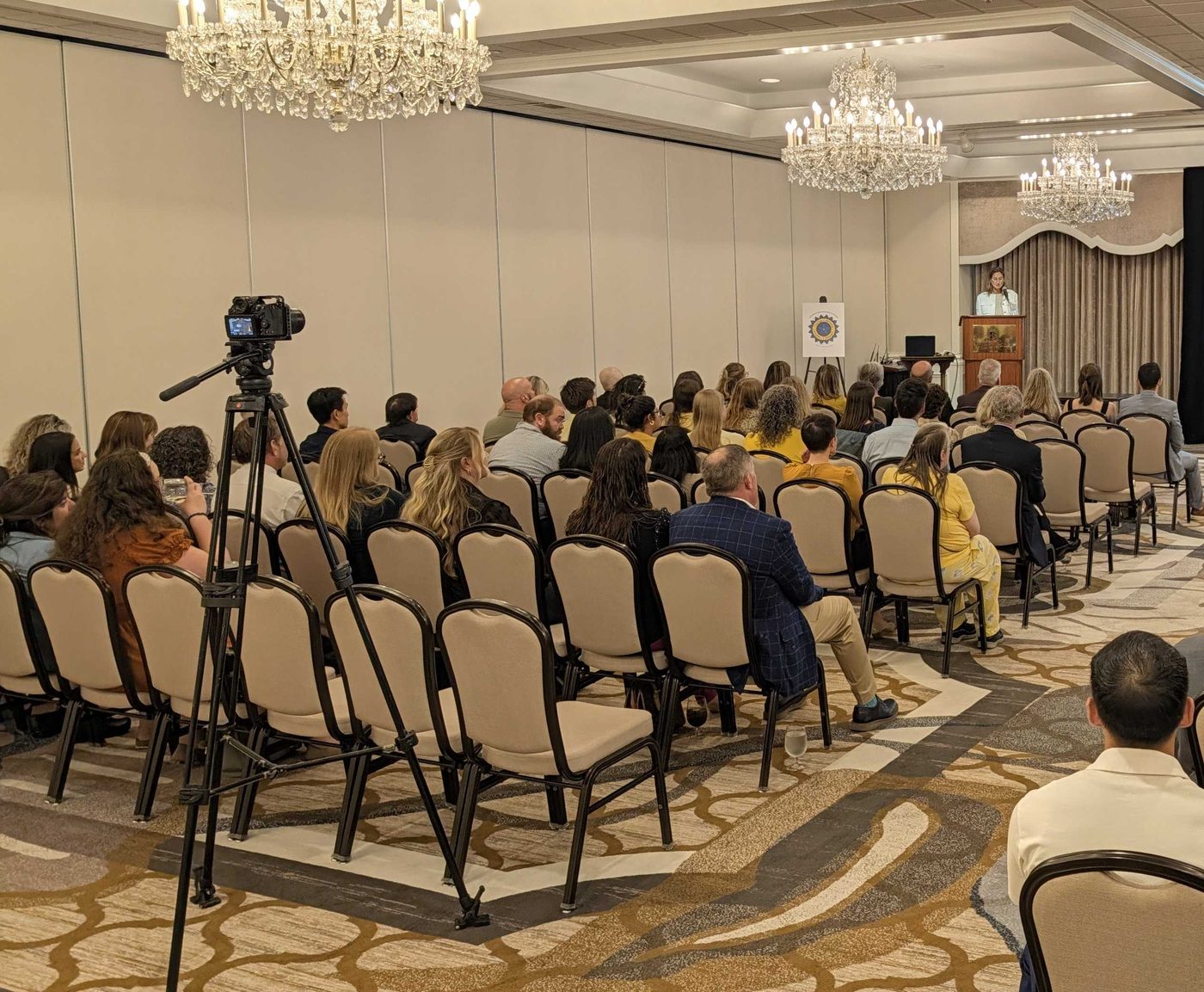
One of the organizations has held a long-standing no-video policy for part of their program. Once the kids meet their youth leader, we stop. That is in the guide in the first screen, in red, phrased as not a negotiation on the day — because the day is exactly when someone well-meaning will suggest an exception.
Another line reads: wides only, framed so no child is identifiable. Shoot the scale, not the faces. That is a creative constraint as much as an ethical one, and having it settled in advance means the camera operator is not making a judgment call about a stranger's child in real time.
The arithmetic nobody does
One more thing the guide holds: honest timings.
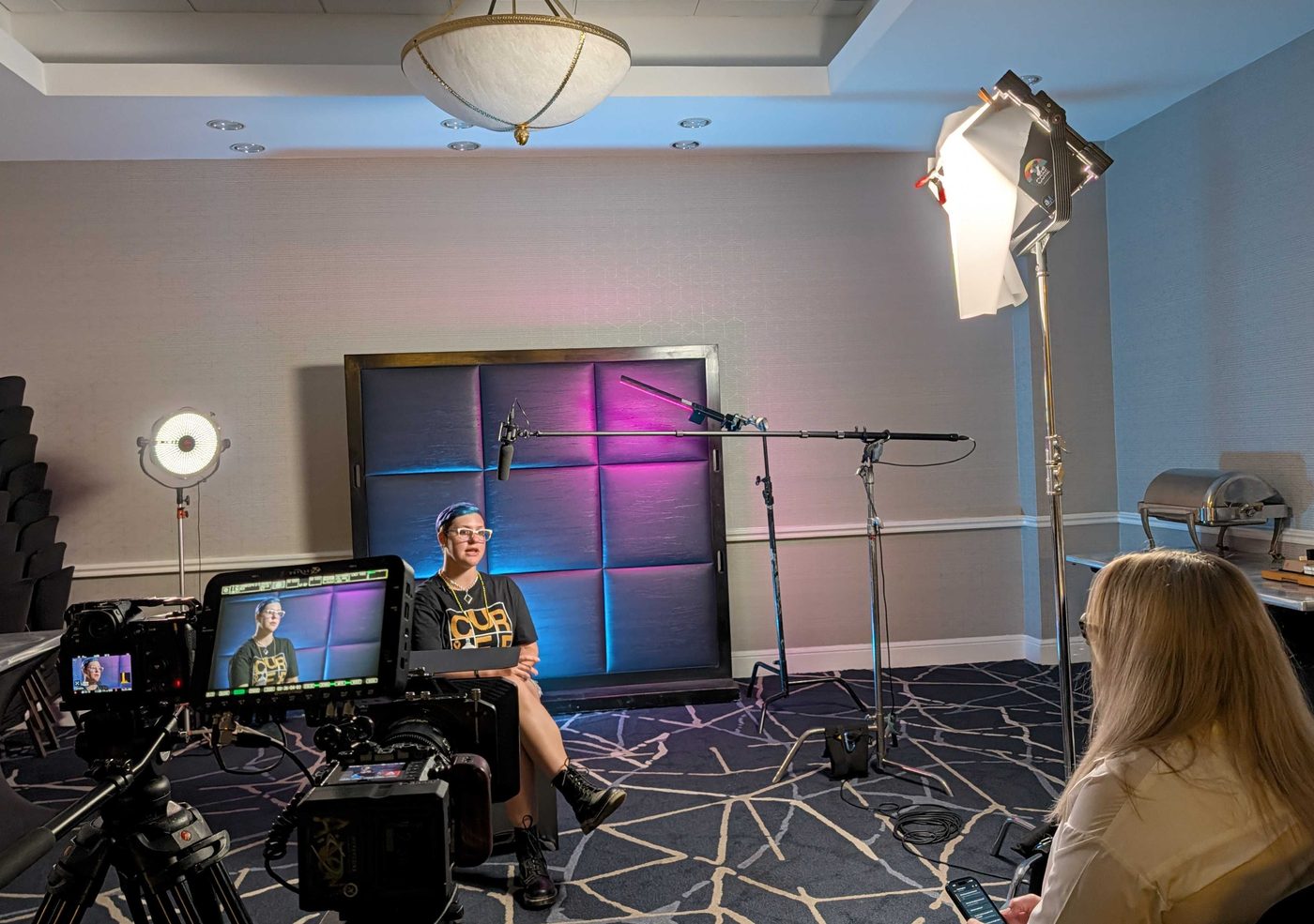
An hour booked for an interview is not an hour of interview. Someone has to be greeted, miked, settled, and un-miked at the end, and the next person has to be brought in. In practice each hour holds about forty-five minutes of usable conversation. So we plan every session for forty-five, not sixty.
That sounds like a small correction. Across a day of back-to-back interviews it is the difference between a schedule that works and one that is thirty minutes behind by lunch and stays there, with the last person of the day getting the worst version of your attention.
The prep is the job
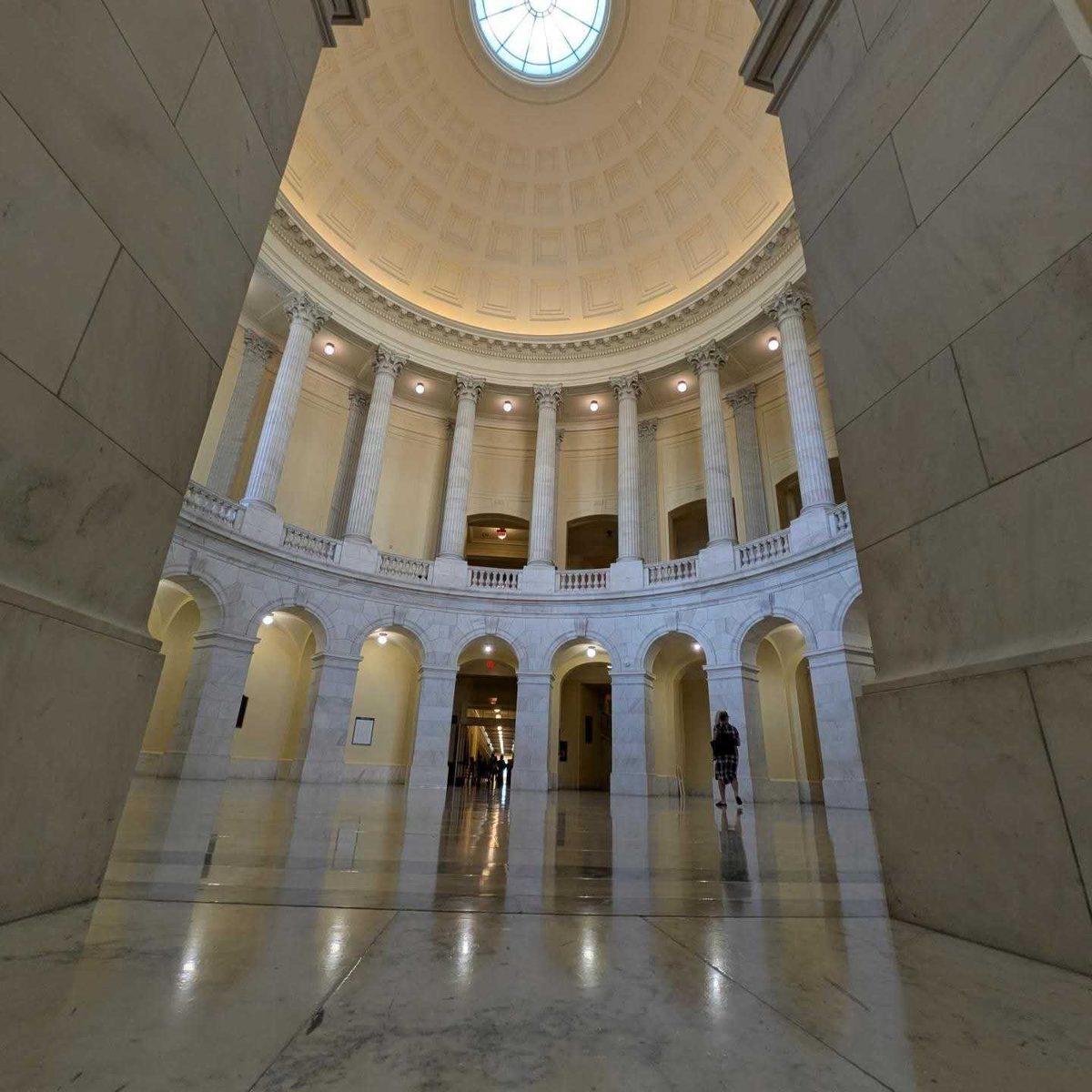
The rest is unglamorous and all of it is the actual work. Where you may film and where you may not. What a federal building allows and how far ahead it has to be asked. Travel for crew and kit across two states. A hotel load-in that turned out considerably more complicated than it looked on paper.
Washington was planned as one sequence rather than three separate shoots. Advocacy sessions, the march, hotel interviews — treated as a single continuous production with its own arc, so the material cuts together instead of looking like three days that happened to involve the same people.
Then the gear fails anyway
On the DC trip a camera overheated and a wireless mic pack stopped working.
Neither mattered.
That is the point of everything above. There was a second camera already running and a third available. There was a backup for the pack. There were enough people on the crew that solving it did not stop anything. The failures cost minutes, not footage, and nothing in the finished pieces will betray that either happened.
Gear fails. It fails on good productions and bad ones at roughly the same rate. The difference is whether the day was built to absorb it.
What this does not mean
It does not mean every shoot should be squeezed for everything it can yield. Plenty of work is one day for one piece, and that is a perfectly good purchase — we do it often.
And a plan only multiplies the output if it is a real plan. "We'll also get some social out of it" is not one. Eight patient stories is a specific commitment made before the first interview, and it changes the lighting, the framing, the questions and the schedule. Decide it afterwards and you have not planned anything, you have hoped.
The useful question before a shoot is not how many days you need. It is what all of this has to become, and whether anyone has thought about that before the van is loaded.