I watched the hair and makeup artist move the mic, and I didn't say anything.
Corporate shoot, 2019. Actors, full crew, close to twenty people in the room. I was crew, not running it. Not new to the work — I'd been running Q'd Up since 2006 — but hired hands on somebody else's set. The lav was under clothing, and it was in the way of something she needed to fix, so she repositioned it. That's her job. She owns the subject's body and wardrobe on a set and she was good at it.
I had the headphones on. I heard what it did.
I said nothing.
It was muffled and full of rustle, and it stayed that way, and I heard it again three weeks later in the edit.
The arithmetic I ran
Here's what was actually going through my head.
I didn't want to embarrass her in front of twenty people. I didn't want to be the reason the day slowed down. I was hired crew on somebody else's set, and I was the sound guy in a room full of client people, and not one of them could hear what I was hearing. So the problem was mine alone, which meant the decision was mine alone, and I made the easy one.
We tried to save it. Noise reduction, EQ, real hours in iZotope RX. None of that puts a lav back where it belongs. It cost a reshoot and a pile of post time. I told the director the audio was bad. The client paid and never knew why it was necessary. I never told the artist.
Nobody else in the room can hear it
This is what makes audio different from every other department on a set.
You are the only person hearing what is actually being recorded. The director is watching the frame. The client is watching their executive. The subject is thinking about their next sentence. Hair and makeup is watching a collar. Nobody else has headphones on.
And audio doesn't announce itself the way a soft focus does. Nobody sees it happen. It shows up three weeks later in the edit, when everyone has gone home and the subject is unavailable and the moment is simply gone.
So the job isn't hearing the problem. I heard the problem. Anyone competent with headphones on hears the problem. The job is saying it out loud, in a room where you're the lowest-ranking person present, about something nobody else can perceive.
That's the part that's hard. That's the part nobody trains you for.
The year before, I had the easy version
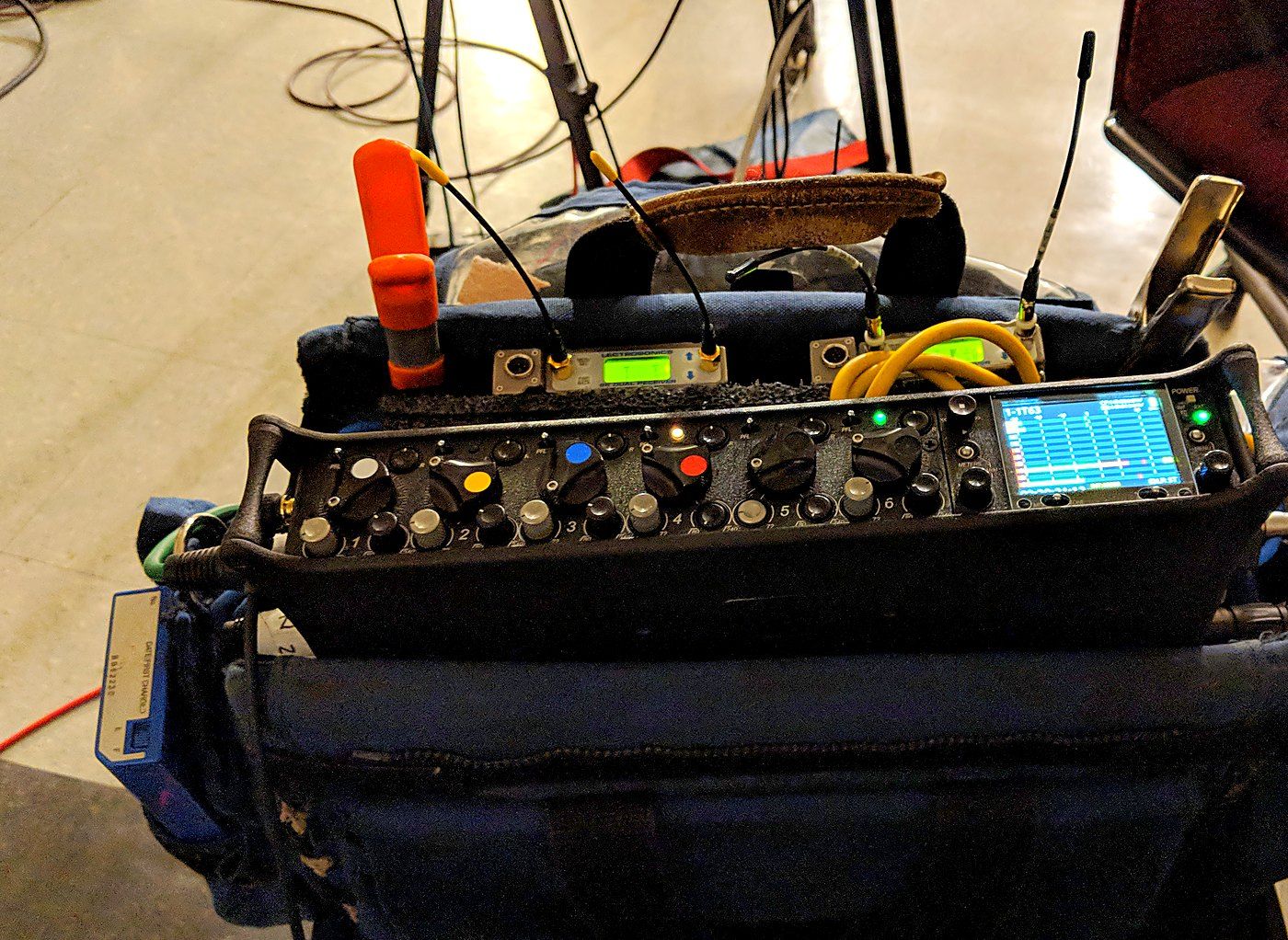
Commercial shoot, also as crew. I was running a Sound Devices 552 and I didn't hit record.
I was worried about the boom. Where it was sitting, whether it was in the shot, whether it would dip into frame when the subject moved. I was so far into the picture that I never looked at the recorder. Which is the joke of it. The one person on set whose job is to not watch the frame was watching the frame.
I noticed two or three minutes into an interview. I checked twice more, hoping I was wrong, with my stomach going. Then I told the director. He was glad I said something. The subject was still miked and still sitting there, so we went again, lost a few minutes, and that was the end of it.
Saying "I forgot to hit record" is embarrassing for anyone who's been doing this since 2006. But it's the easy version of speaking up, because the only person it implicates is me. Nobody had to be corrected. I just had to be willing to look bad for thirty seconds.
I put a procedure in place the next day. Check the red dot. Not the meters, not the assumption that the machine is doing what the machine always does. Look at the red dot before anyone speaks.
I thought that was the lesson. A year later I found out I'd only learned half of it. A procedure protects you from your own mistakes. It does nothing for the moment when the problem belongs to someone else and the only cost of fixing it is your own discomfort.
Where the instinct came from
Not from a club, which is where I'd have guessed.
I came up in live sound, and live sound has no undo. The song happens once, and if you didn't get it, forty people watched you not get it. That teaches you to move fast and to be loud, because nobody in a bar has time for polite. But the failure there is instant and public and then it's over, and you go home.
What actually taught me this was the edit. Sitting down three weeks later with audio I couldn't use, or video I couldn't cut around, and having to build something for a client out of material that wasn't there.
And plenty of it isn't material I shot. A lot of what lands on my desk was recorded by someone else and sent to me. A guest who recorded his half of an interview from the car, doing highway speed, with the window down. Guests who chewed gum through an entire conversation. There is no plugin for either of those. You do what you can, you deliver something worse than it should have been, and the person who sent it usually has no idea anything was wrong.
Because they weren't wearing headphones either. That's the whole thing, again, from the other side.
That's what makes 2019 hard to write about. I wasn't new to this. I'd been running Q'd Up since 2006. I'd spent years at that desk with unusable material, and I knew exactly what I was signing up for when I stayed quiet. On that particular set I was hired crew, not the producer, which meant the file was going to be somebody else's problem to open. I let that be enough.
So the instinct came from the wrong end of the process. Not from the room. From the desk, looking at what a two-minute silence on set turns into later. I had the instinct. I ignored it.
What it looks like when it works
Earlier this year I was in State College with Derek Lau, shooting the Nittany Dance Project for a THON piece for the documentary series we produce with Penn State Health Children's Hospital and Four Diamonds. We needed to grab a short interview and we didn't get to pick the room. We took a dark hallway.
It turned out we were directly under a large HVAC unit, which we found out when it kicked on mid-shoot.
There were five other people standing there. Jill from the client side, Derek, three of the dancers. We stopped, moved, and rebuilt the mic placement to get the HVAC out of the way enough to have usable audio. It cost a few minutes. Everyone thought it was funny. There was some mild frustration that the thing was so loud, and that was the extent of it.
That's the honest version of what stopping a room looks like now. Not brave. Not tense. A little bit of a joke, and then back to work.
Which is exactly the point. I spent 2019 protecting everyone from a two-minute inconvenience they wouldn't have minded. In twenty years nobody has ever been angry with me for stopping. Not once. People are far more grateful to be held up for a few minutes than to sit through a session that produces something unusable. The cost I was so worried about doesn't exist. I invented it.
The interruption people actually resent is the other one. The one that shows up three weeks later, when it isn't an interruption anymore, it's a calendar problem.
Spend it early, where it's cheap
When I hear something go wrong now, I say so. Out loud, in the moment, in front of whoever is standing there. Speaking up costs a minute. Staying quiet cost a reshoot.
The rest is arranging things so I have to say it less. Earlier this year we recorded at the Hershey Historical Society with Doug Legore, and the approach changed before anyone got in a car. Working out over email how many people needed to be recorded and what the client actually needed from the session, it became clear that individual mics were the wrong call. We went with boundary mics on the room. Walking it on the day with Doug and the client confirmed it. The hard conversation had already happened in writing, days earlier, where it cost nothing and nobody was standing around waiting on me.
That's the trade. The volume came down and moved to the front of the job, where it's free.
I still say stop. I'm just no longer afraid of what it costs.