
There are two aesthetics here and both are legitimate.
One is the raw version: mic in the face, table between the hosts, room sound left in. The Joe Rogan school. It signals that nothing has been staged and nothing has been smoothed, and for some shows that is the production value. Underground hip hop is its own art form. So is this.
The other is produced like a show. Story arcs, music beds, multiple cameras, a room lit deliberately. The audience reacts to the moment rather than only to the conversation.
The problem is that most businesses end up with the first one by default when their ambition was the second. They wanted a show. They got a guy at a table with a mic in his face — not because anyone chose that, but because nobody chose anything.
How you find out too late
During the pandemic we started a podcast with Senscient. Straightforward brief: record the conversations, cut the episodes, publish.
What became obvious once we had material was that the interviews weren't the product. The stories inside them were. The strongest version of that show wasn't a recording of a conversation — it was a narrative piece built from recorded conversations, with structure imposed afterward. Different edit, different pacing, different thing entirely.
We got there, and it worked. But we got there by discovering it, which is the expensive route. Had we asked the format question before the first session, we would have recorded differently — different questions, different coverage, different room.
The decision is upstream of the gear
People assume this is a budget problem. Mostly it isn't. It's that "we should do a podcast" is a decision about a channel, not about a show, and everything downstream inherits that vagueness.
Take lighting. There's no formula here — what a room needs depends on the show and the subject, and every choice is on the table. That's exactly the point. When nobody has said what the show is, lighting stops being a set of choices and becomes a default: put a soft source in front of everyone, make sure faces are visible, roll. Which is fine, and it produces a room that looks like a podcast studio, because that's the only thing it was ever asked to look like.
A set is a series of decisions about what the audience should feel. A podcast studio is the absence of those decisions. Both end up on camera.
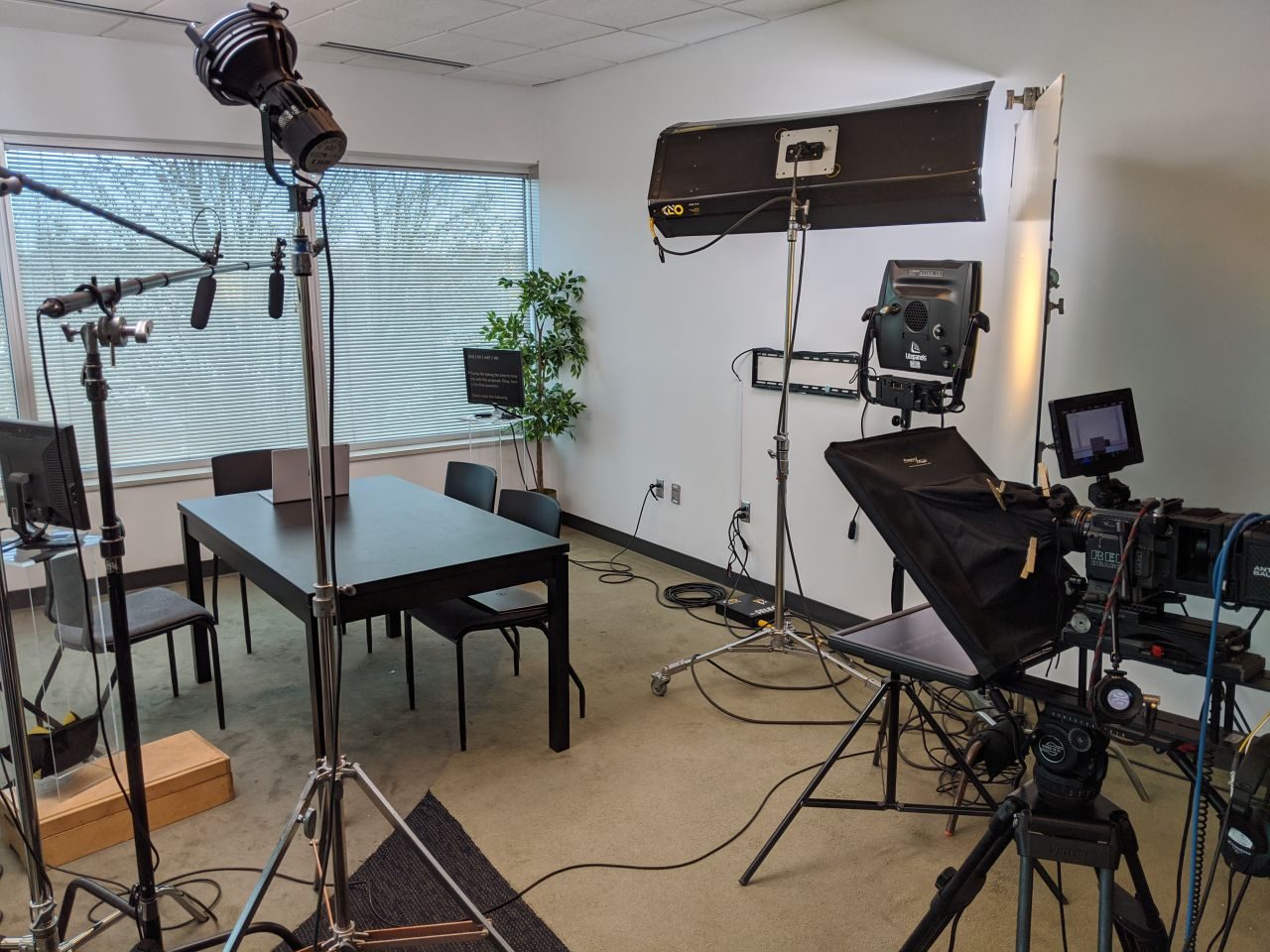
When the raw version is right
Plenty of the time, and I want to be specific about it rather than pretend one is simply better.
When polish undercuts credibility. An expert who looks like a marketing asset is less believable, not more. Some authority comes precisely from looking unproduced.
When cadence beats production. We produce a daily hospitality show. A daily show cannot stop to light a set, and shouldn't try. Frequency is the format.
And the practical one, which decides it more often than taste does: a set is a place. Lighting it like a show means a fixed room. The moment you need a remote guest, they break the look — and now you have half a produced show and half a video call, which reads worse than either one committed to.
Underground travels. A set doesn't. If your show depends on guests you can't get into a room, that isn't a preference, it's a constraint, and it should decide the aesthetic before anyone prices a light.
The test
Mute the audio and look at the frame. Would you say that's a podcast or a show?
Either answer is fine. What matters is whether it's the one you picked.
What this means if you're hiring a producer
Ask what your show is before you ask what it costs. A producer who quotes you a day rate without asking what the thing is supposed to feel like is quoting you a default — and you'll be looking at that default for as long as the show runs.