
Home / Hershey, PA
Hershey · Derry Township
Our longest-running production is filmed in and around Hershey. So is our largest internal-communications engagement. We are based ten minutes away in Hummelstown, and a meaningful share of everything Q'd Up has made has been made inside a hospital, a corporate campus, or a community space in Derry Township.
Flagship
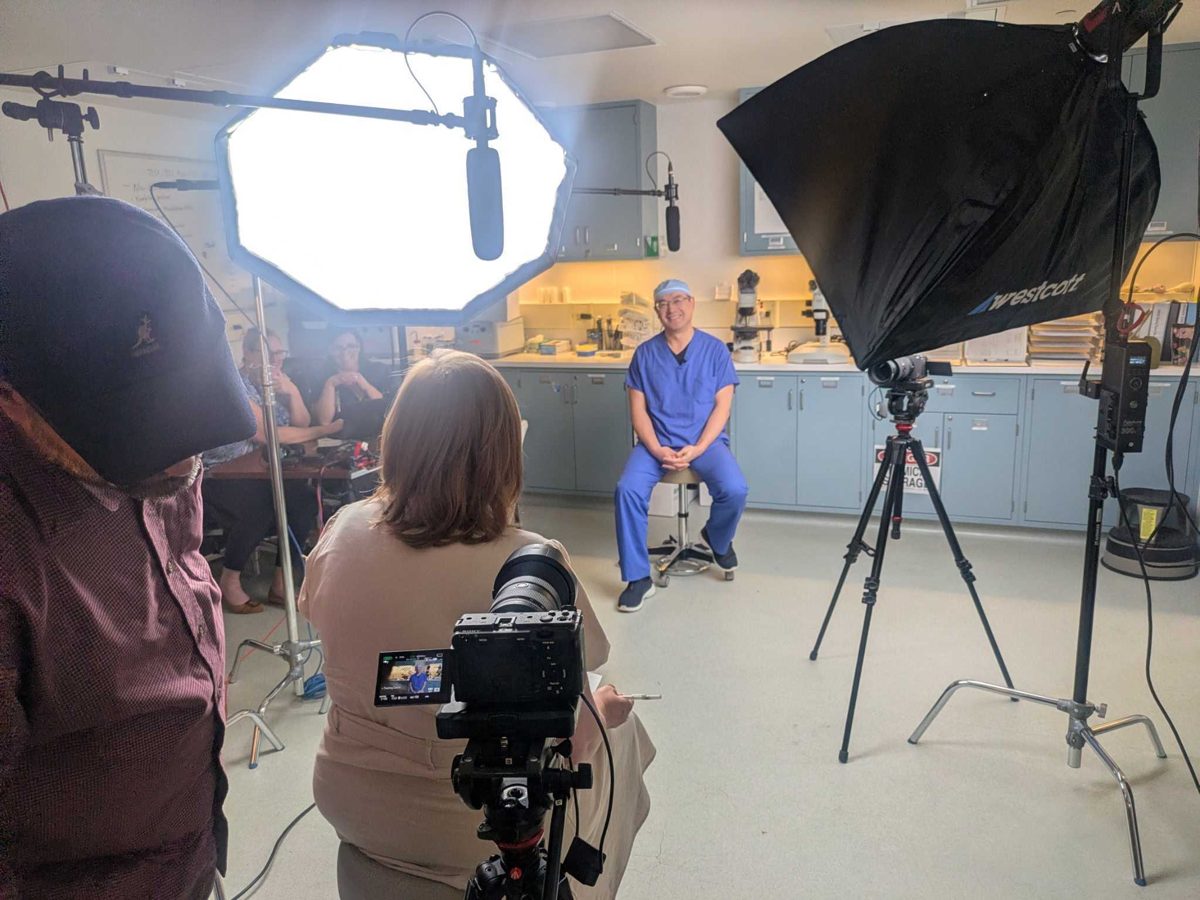
Penn State Health Children's Hospital · Four Diamonds
Penn State Health Children's Hospital and Four Diamonds needed young adult cancer patients to tell their own stories, without the gloss that makes hospital content unwatchable. We built a patient-led series filmed on location at therapeutic events and treatment milestones, running across YouTube, Spotify, Apple Podcasts, and its own site. Four years in, it is still in production.
Track record
Life on Pause — patient-led episodes shaped by the participants themselves, captured on location at therapeutic events and community programs, plus bereavement and memorial pieces cut from existing footage.
Visit the series →COVID Q&A — an internal podcast built during the pandemic to keep a 15,000-person health system workforce informed, held to a 24–48 hour delivery window week after week, for as long as it was needed.
Internal · not publicTalking Snack and The Pod for The Hershey Company — two branded internal podcasts inside a global workforce of more than 60,000 employees, one company-wide and one for a distributed sales force. Employee engagement at a scale most internal comms teams never attempt.
Internal · not publicDays crewed on Penn State Health commercial shoots alongside their in-house media team. Not our production, but our hands — and a useful way to know how a large health system actually operates on set.
Location recording →Local specifics
This is the part most production companies have never done, and it is the part that decides whether a healthcare project ships or stalls. None of what follows is about cameras.
Everyone on camera needs to have agreed to be there, understood where it will run, and have a route to change their mind later. With patients and families that is not a signature at the door — it is a conversation before the shoot, a check-in on the day, and a genuine willingness to shelve material afterwards. We have shelved finished work over exactly this, and would again.
Whiteboards, wristbands, door placards, charts on a monitor, a name on a lanyard, a room number in a reflection. A clinical environment is dense with identifying detail that has nothing to do with your subject and cannot be in the final cut. That is a framing discipline on the day and a review pass in the edit, and it is faster to get right in-camera than to fix later.
Treatment runs when treatment runs. Someone can be well enough to film in the morning and not in the afternoon. Any production built around patients needs slack in it and a producer who treats a cancelled day as normal rather than a problem to push back on. That expectation has to be set with the client at the start, not discovered in month three.
Corridors are working corridors. Doors need to open. Nothing runs across a threshold, nothing blocks equipment access, and cases stage outside the space rather than in it. Practically this means a smaller lighting package, battery power over running cable, and being able to break down completely in minutes if the room is needed.
In an academic medical center the approval path usually touches communications, risk or legal, and the clinical team running the area — sometimes research as well. That is appropriate and it is not fast. Building the review points into the production schedule up front is the difference between a series that runs for years and a pilot that never clears.
The instinct with healthcare content is to smooth it — warm music, hopeful voiceover, an outcome. Produced too cleanly, patient stories read as marketing. Produced carelessly, you have used someone's worst year as content. The format has to hold both, which is a structural decision made before a camera comes out, not a tone applied in the grade.
Setups
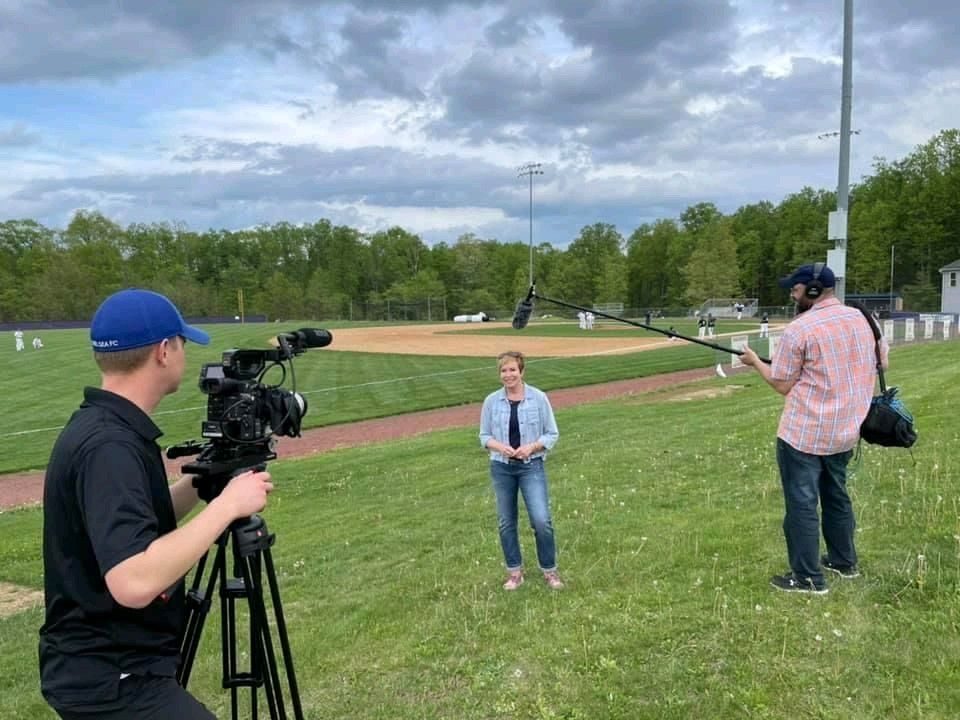
Corporate campus
An internal audience is captive and unimpressed. They will not tolerate a corporate video voice, and they notice immediately when leadership is reading. The format has to earn a listen from people who already work there, which usually means less production polish and more actual conversation. Getting that balance right is most of the job.
Badging and escort for crew, brand and legal review on anything that carries the mark, coordination across sites and time zones for a global workforce, and a delivery pipeline that lands inside whatever internal platform your people actually open. The recording is the easy part.
Internal communications podcasts →There are Life on Pause episodes embedded on this site, and that is not a contradiction. The series is public — it runs on YouTube, Spotify, Apple Podcasts, and its own site — and every episode is something the participant chose to put out into the world. Showing you a finished episode is showing you their work, not ours.
The line sits at everything else. Raw and unused footage stays unused. The bereavement and memorial pieces we cut from existing material are made for families, not for our portfolio. We do not repurpose patient or family testimonials as marketing for ourselves, and we have turned that down when it was offered. And because screenshots of our production tools carry real names and real project detail, the interfaces you see when we write about our process are neutral mockups with invented labels rather than the real thing.
We have also shelved a finished, half-edited episode rather than publish it, and written publicly about why.
If you are a hospital, a foundation, or anyone whose story involves people at their most vulnerable, that is the standard you should be holding every vendor to. Ask us about it directly.
Why we shelved a finished episode →Nearby
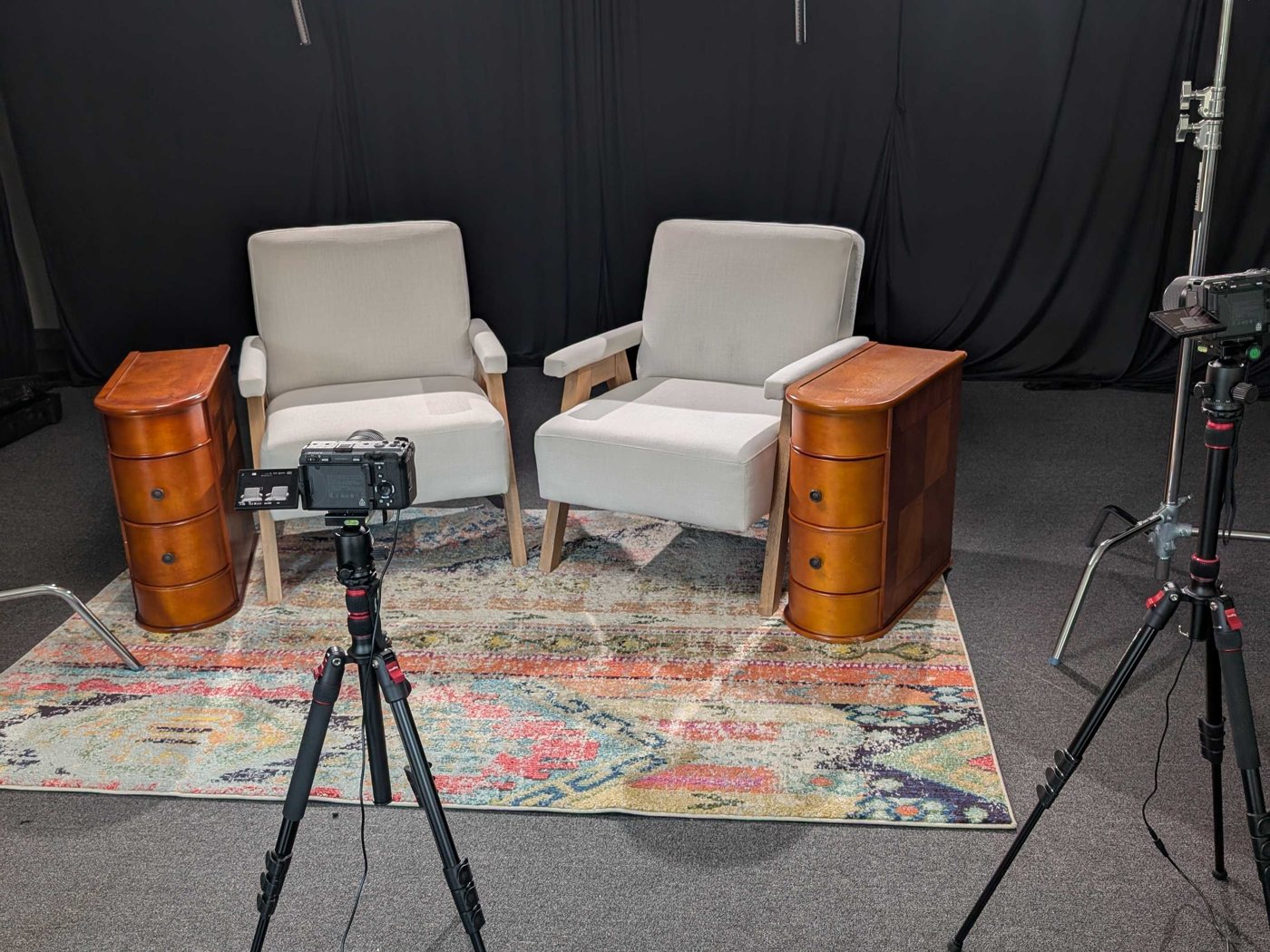
When the story does not need to be on location, there is a purpose-built podcast and video studio nearby at 1801 Oberlin Road in Middletown — a controlled room, an engineer running the session, and nothing to set up. It runs as 717 Content at Studio 1801.
Book the studio →Hospital, campus, conference space, or somewhere with no power and a hard deadline. Location work is the majority of what we do, and Derry Township is the shortest drive on our list.
Location recording →Ways in
Ongoing
You show up and talk. We handle format, capture, edit, art, publishing, and the clips that come off it. This is most of what we do.
Podcast production →Project
Documentary and story video — a program, a founder, a year of something. Shot on location, cut for weight rather than length.
Documentary & video →By the day
You have the plan and need people who can execute it — an event, a panel, a multi-room shoot. We bring the kit and the discipline.
Location recording →Next
Thirty minutes, no deck. Tell us what you're trying to say and we'll tell you honestly whether we're the right shop for it.