
Home / Lancaster, PA
Lancaster County · 40 minutes east
Second- and third-generation manufacturers. Food producers who have been on the same site since before the interstate. Family firms where the founder's name is still on the building and the founder's grandson is still answering email. That is a specific kind of story, and it is not the one most production companies are set up to tell.
The market
It gets written about as farmland and tourism. The employment numbers say something different.
Roughly 36,900 manufacturing jobs as of late 2025, about 20,700 of them in durable goods, according to Pennsylvania's Department of Labor & Industry. That is a dense concentration of industrial B2B companies inside a forty-minute drive.
County unemployment sat at 2.7% in December 2025, well under the state and national rates. When you cannot hire, recruiting content and employer-brand video stop being nice-to-have and start being a line in the hiring budget.
Food processing here is not a farm stand. It is plants, cold chain, co-packing, and distribution — regulated environments with real constraints on what a camera can do and where it can stand.
Penn Medicine Lancaster General Health is among the county's largest employers. Health systems and their affiliated practices have the same content problem everyone else does, plus a privacy framework on top of it.
Downtown Lancaster city — professional services, agencies, a real arts economy — and the county, which is industrial and agricultural. They are twenty minutes apart and they are not the same production problem.
A lot of these companies are still owner-operated. That means the decision-maker is in the room, the approval cycle is short, and the person on camera is the person whose name is on it. It is the easiest kind of client to make something good with.
Local specifics
Six things that decide whether a day here goes well. None of them are about cameras.
Safety briefing, PPE for every person on the crew, eye and hearing protection, steel toes, and a walk of the route before anything is carried through it. Nothing gets rigged to structure, nothing blocks an aisle or an exit, and cable does not cross a forklift lane. Get this wrong once and you do not get invited back — and rightly so.
Ambient on a working floor will bury a lav and make dialogue unusable. The realistic options are shooting interviews in a quieter room and using the floor for visuals, or negotiating a genuine shutdown window — which costs the client real production time and has to be worth it. Deciding that in advance is the difference between usable audio and a re-shoot.
Shift changes, run schedules, and sanitation windows in food facilities are fixed. The good news is they are predictable, so a shoot planned around them gets more access, not less. The bad news is that a crew showing up expecting the floor to accommodate them will get a very short day.
Many Amish and Old Order Mennonite people decline to be photographed or filmed, on religious grounds. If your business touches those communities as suppliers, employees, or neighbors, this is not a nuisance to work around — it is a boundary to respect without negotiating. It can usually be handled with framing, with a different subject, or by asking first and accepting the answer. It should never be handled by shooting anyway and hoping nobody minds.
Power, or the battery capacity to not need it. Livestock and equipment in the ambient bed. Weather with no indoor fallback. Roads that are slow behind farm traffic and, in parts of the county, horse-drawn traffic. It is all workable and it all needs to be in the plan rather than discovered at eight in the morning.
Hummelstown to most of Lancaster County is about forty minutes on 283. Route 30 and 222 around the city are a different matter at the wrong hour, and a load-in that assumes a clean run will start late. We build the call time around traffic rather than around the map.
Setups
In the county
Not a service-area map. Specific rooms, in this county, on real call sheets — going back to the first one.
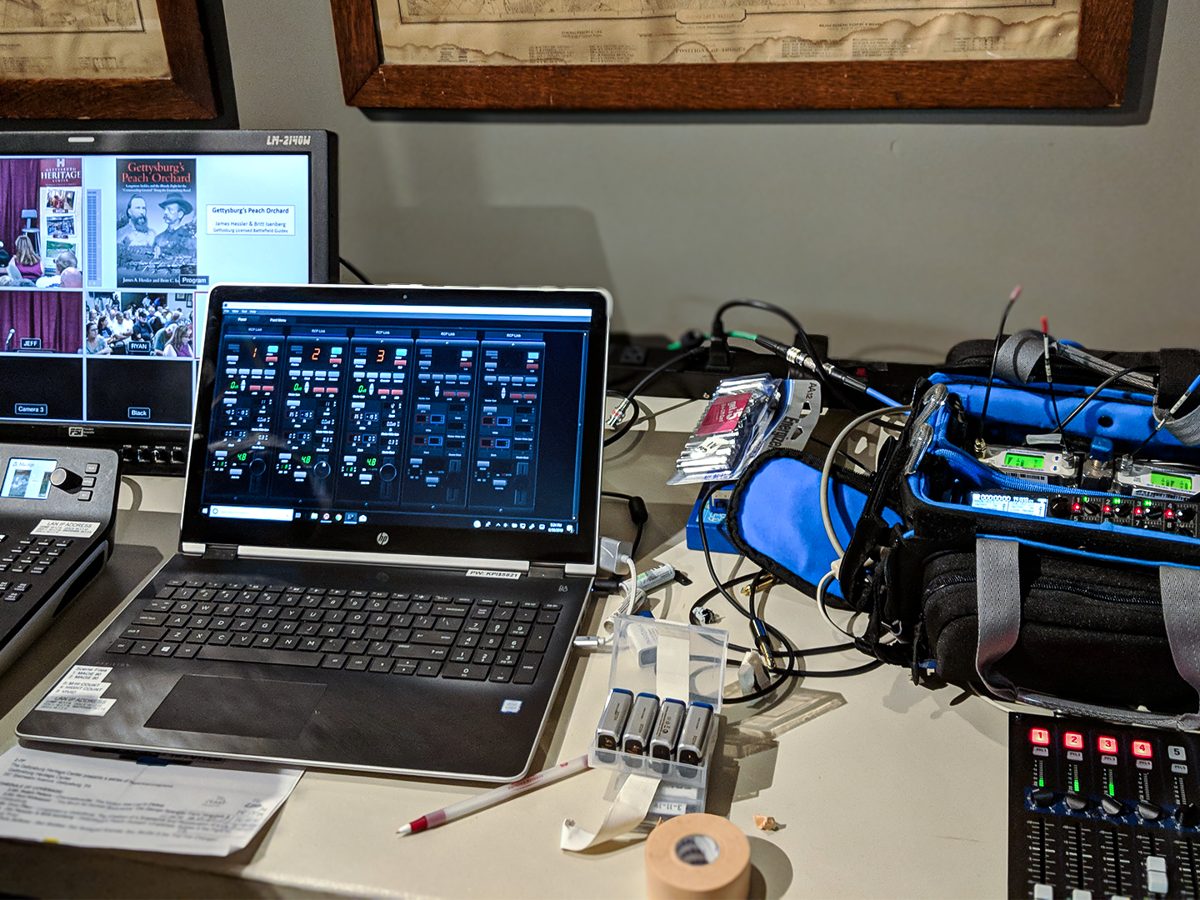
An arts and community series produced out of Lititz. One of the public shows on our shelf, and a genuinely different production problem from a corporate interview — performance, room acoustics, and an audience that is part of the recording.
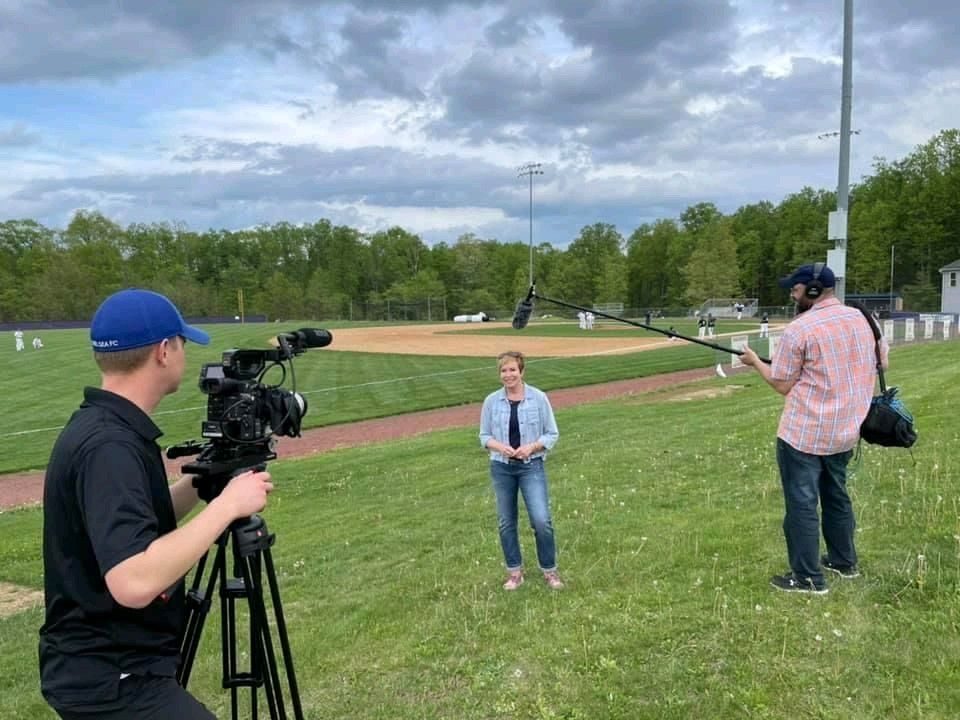
See the full shelf →Live sound for an outdoor festival at Central Market. Open air gives you nothing back — no room to carry the low end, wind across the mics, downtown traffic underneath everything, and slap coming off the buildings around the square. It needs more system than people expect and a mix that stays intelligible at the back without flattening the neighbors.
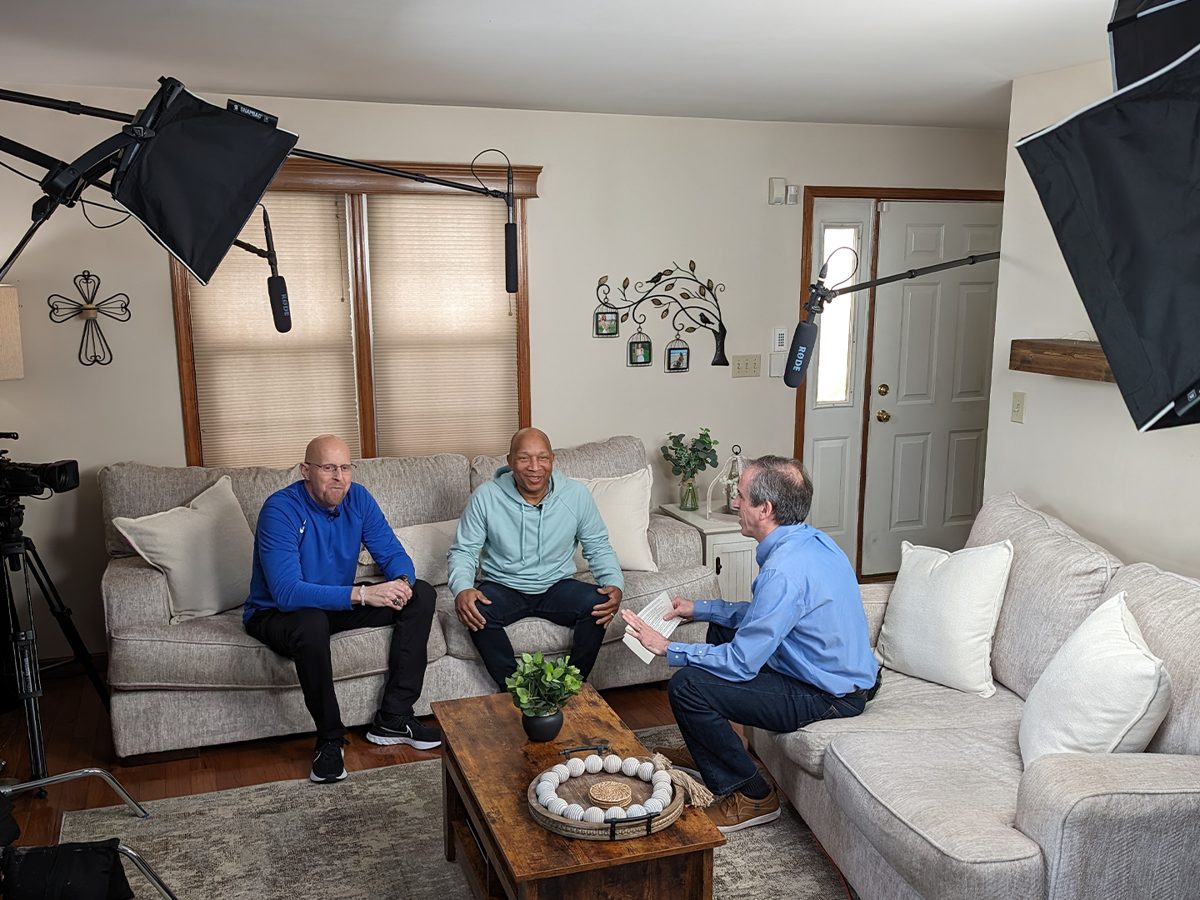
Location recording →Our four-year series with Penn State Health Children's Hospital and Four Diamonds films at therapeutic events and community programs held away from the hospital — including sessions at Zest Cooking School in Lititz. Small footprint, no disruption, and participants who decide what gets used.
How we film this work →Days on other teams' productions with Derek Lau's shop on North Shippen Street. Not Q'd Up engagements, and we list them plainly rather than as clients — but it is how we know the crews, the vendors, and the rooms in this market.
Where it started
The first control room John ever worked in was in this county. He served his recording internship at CAB Studios in Ephrata, long since closed, which is where the habits came from: gain staging before plugins, getting it right at the source, and the understanding that nobody cares how the sausage is made as long as the take is good.
After that it was the Lancaster music scene. Recording at The SugarTank downtown. Running music shows at the Chameleon Club on North Water Street. Live sound in rooms where there is no second take, no fixing it later, and an audience who will tell you immediately if you have got it wrong.
That background is why an outdoor festival stage or a panel in a hard-surfaced conference room does not worry us. Corporate audio is, mostly, easier than a live band — but only if you learned on the hard version first.
So the pitch is not that we service Lancaster County from somewhere else. It is that this is where the work began, and it is a forty-minute drive back.
And the network
John is a member of RPP, which runs chapters in Lancaster as well as the Tri-Town chapter he attends in Hummelstown. If you are in one of them, or visiting, that is the easiest place to have this conversation without booking anything at all.
A lot of what we do here is a single day — a plant tour, an event, a founder interview, a run of testimonials in one afternoon. Done properly a day yields more than people expect, and being forty minutes away means you are not paying for anyone's drive.
Some work does need longer than a day — a show that publishes every month for three years, a documentary that follows something over time, an internal program a workforce actually watches. That is decided by format and consistency and whether anyone still cares in month eighteen. It is a different purchase from a day, and it should be.
There is also a version of the founder-story video that every family manufacturer has already made and nobody has watched: the drone shot, the swelling music, the timeline of the company. If that is what you want, we are probably the wrong shop. If you want to find out what is actually interesting about a company that has survived four decades, that is the conversation we like having.
Ways in
Ongoing
You show up and talk. We handle format, capture, edit, art, publishing, and the clips that come off it. This is most of what we do.
Podcast production →Project
Documentary and story video — a program, a founder, a year of something. Shot on location, cut for weight rather than length.
Documentary & video →By the day
You have the plan and need people who can execute it — an event, a panel, a multi-room shoot. We bring the kit and the discipline.
Location recording →Most of what we do here is on location, and that is usually the right call — the room you work in says something a studio cannot. But if you would rather not turn your office into a set, there is a purpose-built podcast and video studio at 1801 Oberlin Road in Middletown, running as 717 Content at Studio 1801. An engineer runs the session and there is nothing to set up.
Book the studio →Plant floor, office, event space, or a founder’s own building. Location work is the majority of what we do, and it is what these pages are actually about.
Location recording →Next
Thirty minutes, no deck. Tell us what you're trying to say and we'll tell you honestly whether we're the right shop for it.