
Home / Lebanon County, PA
Lebanon County · 20 minutes east
Palmyra is practically next door. Annville, Mount Gretna, and Lebanon city are all inside half an hour. And yet almost every production company serving Lebanon County businesses drives in from Harrisburg, Lancaster, or Reading, and bills for the privilege. We are already here.
The market
A small county by population with a genuinely industrial employment base. The concentration is the interesting part.
Pennsylvania's Center for Workforce Information & Analysis puts county manufacturing at roughly 9,500 jobs with a location quotient of 1.90 — meaning manufacturing is about twice as concentrated here as it is statewide. For B2B industrial work, that density matters more than headcount.
Health care and social assistance employ more people in the county than any other industry. Same content problems as everyone else, plus a privacy framework on top — which happens to be the environment we have spent four years working in.
Food manufacturing and packing are long-standing county industries, from Palmyra out to Myerstown and Jonestown. These are regulated plants with real constraints on what a camera is allowed to do — more on that below.
Agriculture also runs well above the state's share of employment. That means suppliers, equipment dealers, processors, and co-ops — a whole B2B layer sitting behind the farms themselves.
The county's major employers include names like Bayer Consumer Care in Myerstown, BlueScope Buildings in Annville, Supreme Mid-Atlantic in Jonestown, and ASK Foods in Palmyra. Not our clients — just the shape of the market, and it is more industrial than outsiders assume.
Mount Gretna is a genuine anomaly: a Chautauqua community with a summer theatre and an open-air tabernacle, sitting in the middle of a manufacturing county. It is also a place we have filmed.
Local specifics
Six things that decide whether a day here goes well.
Many food processing facilities operate a no-glass rule in production areas, which is not a suggestion — a broken filter over an open line is a product recall. That means declaring every piece of glass on the kit, agreeing how it is protected, and in some zones shooting through a window or from a walkway instead. Nobody tells you this in advance unless you ask, and turning up unprepared ends the day.
Moving a camera from a warm dock into a chilled room, or back out again, condenses moisture on the front element and the sensor block. The fix is planning: let the body come up to temperature in the space before you need it, shoot the cold areas in one block rather than bouncing in and out, and build the wait into the schedule instead of standing around wiping glass.
Hairnets, beard nets, smocks, boot covers, and a wash station between zones. Some areas are simply not enterable with a tripod. The practical answer is a smaller package, a longer lens from a permitted position, and a plant escort walking the route with you the week before — which they will almost always agree to if you ask early.
Rooms like the Allen in Annville were built to play a finished mix through an installed system, not to host a live band. That means no stage lighting rig, no fly space, a screen where the backline needs to go, raked seating that changes how the room couples, and house power that was never sized for a full PA. It is all workable — but the rig is yours to bring, and an hour on site beforehand is worth more than any amount of guessing at soundcheck.
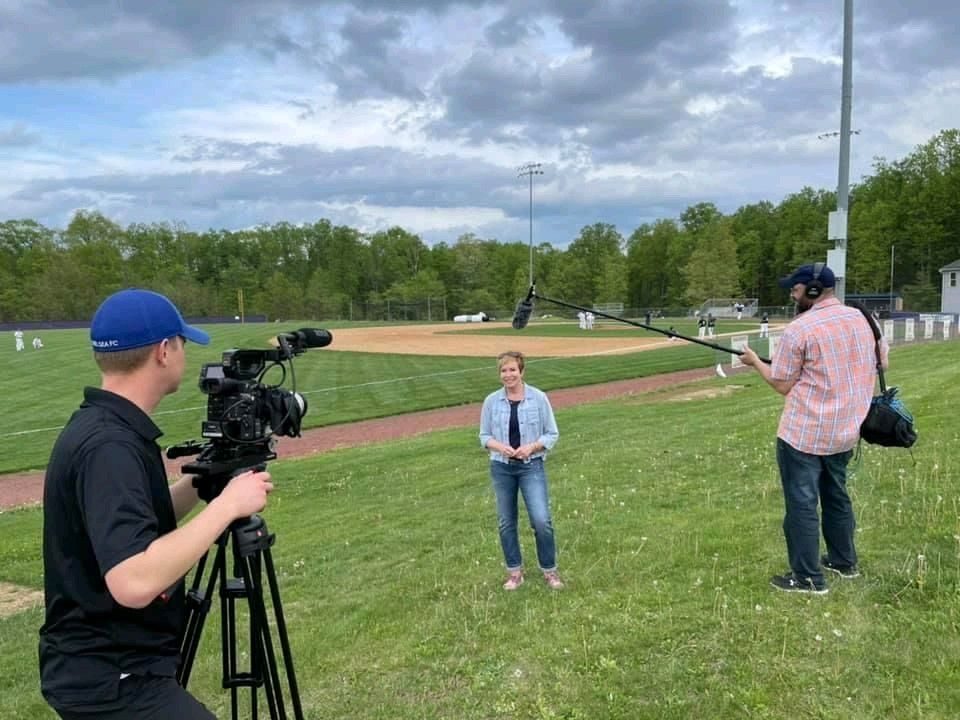
Around Mount Gretna, a lot of programming happens at camp and retreat properties — which means activities spread across acres, buildings without production power, patchy signal, and no indoor fallback when the weather turns. Everything runs on battery, everything gets carried further than you planned, and the audio approach assumes wind and ambient rather than pretending them away.
Hummelstown to Palmyra is a few minutes. Annville, Mount Gretna, and Lebanon city are twenty to thirty. Harrisburg International is under thirty miles if you are flying a subject in. There is no travel day, no overnight, and no reason a pickup shot has to wait for the next full production day.
Setups
In the county
Not a service-area map. Specific rooms, in this county, on real call sheets.
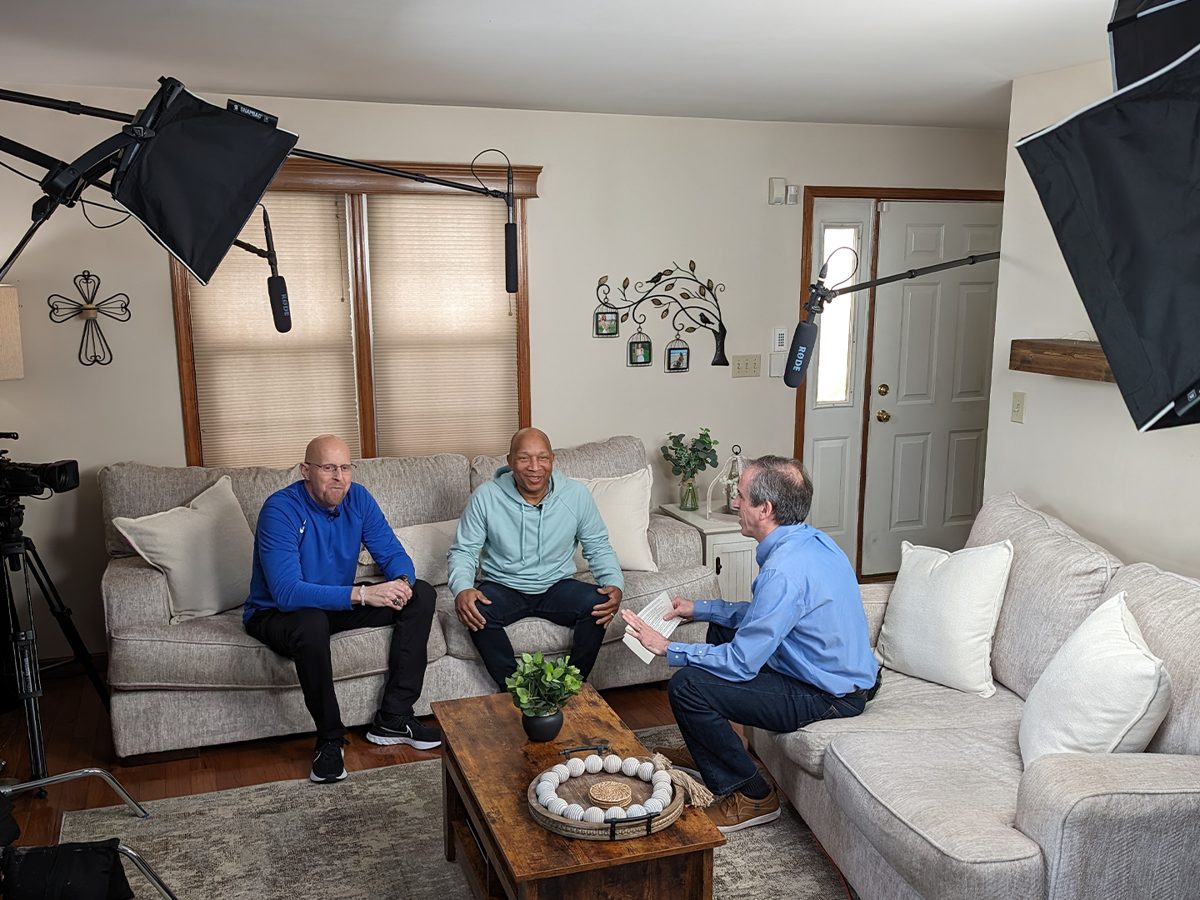
A production day working across several rooms in the studio downtown — a large, multi-floor building with exposed brick, high ceilings, and a lot of natural light. Being able to move between rooms in one booking matters more than square footage: a setup in one, an interview in another, and no rebuild in between.
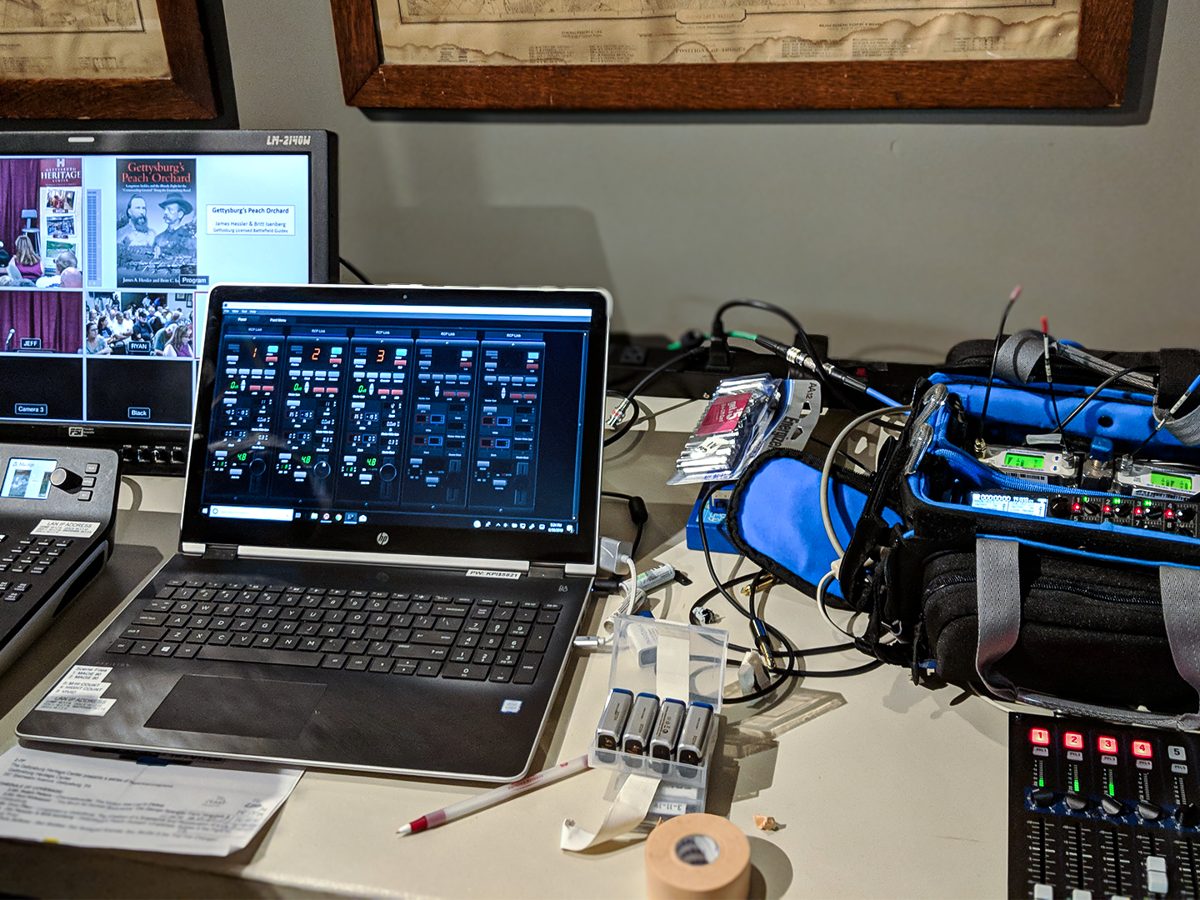
Or use our own room →Running sound for a live music show in the Allen, which is a movie theatre. A cinema is built to play back a mix that was finished somewhere else, so putting a band in one means bringing the whole PA, finding power that was never meant to feed it, and mixing for a raked room with a screen where the stage should be.
Location recording →Our four-year series with Penn State Health Children's Hospital and Four Diamonds films at therapeutic events and community programs held away from the hospital — including at Gretna Glen, the camp and retreat center near Mount Gretna. Small footprint, no disruption, and participants who decide what gets used.
How we film this work →Four years of production in Hershey and Hummelstown, the next county over — a documentary series, two internal shows inside a 60,000-person global workforce, and a health system podcast on a 24–48 hour turnaround.
See the full shelf →Lebanon County is not a big market, and we are not going to pretend it is. There are fewer production companies here than in Lancaster or Harrisburg, which cuts both ways: less competition, but also fewer companies in the habit of commissioning this kind of work at all.
So if you run a manufacturer, a processor, or a health organization here and you have never made a show before, the honest first conversation is not about cameras. It is whether you have something worth saying every month for a year, and who inside your company is actually going to say it. If the answer is nobody, a single well-made film is a better use of your money than a series that dies at episode four. We will tell you that.
We do both, and we would rather sell you the right one. A well-planned single day and a program that runs for years are different purchases, and only one of them is right for where you actually are.
Ways in
Ongoing
You show up and talk. We handle format, capture, edit, art, publishing, and the clips that come off it. This is most of what we do.
Podcast production →Project
Documentary and story video — a program, a founder, a year of something. Shot on location, cut for weight rather than length.
Documentary & video →By the day
You have the plan and need people who can execute it — an event, a panel, a multi-room shoot. We bring the kit and the discipline.
Location recording →Most of what we do here is on location, and that is usually the right call — the room you work in says something a studio cannot. But if you would rather not turn your office into a set, there is a purpose-built podcast and video studio at 1801 Oberlin Road in Middletown, running as 717 Content at Studio 1801. An engineer runs the session and there is nothing to set up.
Book the studio →Plant, processing facility, theatre, or a camp field with no power. Location work is the majority of what we do, and it is what these pages are actually about.
Location recording →Next
Thirty minutes, no deck. Tell us what you're trying to say and we'll tell you honestly whether we're the right shop for it.